The Songwriting Process From First Spark to Finished Song
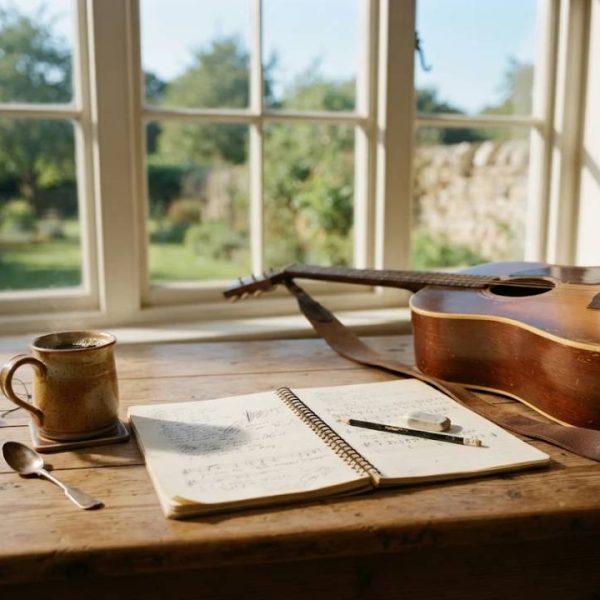
Every songwriter has a different way of working, but most songs follow a path from a small spark to a finished piece that other people can sing. Some writers start with a melody, others with a title or a line of poetry. The process can feel mysterious, yet it can be learned through habits, tools and practice. This article describes a practical songwriting process, from collecting ideas to sharing the finished song with listeners in other languages.
Collect Ideas All the Time
Ideas appear while walking, cooking or riding a bus. Keep a notebook or a voice memo app ready and capture fragments without judging them. A phrase, a rhythm or a chord progression may look weak today and become the heart of a song next month.
A songwriter who collects ideas never faces a blank page for long.
Choose a Clear Subject
Strong songs usually say one thing well. Decide what the song is about, whether it is a memory, a question, a person or a place, and write a single sentence that summarizes it. Every line can then be tested against that sentence.
Focus gives a song power and direction.
Find the Melody and Groove
Hum over simple chords, try different tempos and record several versions. Notice which melody feels natural to sing and which rhythm makes your foot tap. Simple melodies are easier for listeners to remember.
Singable beats clever in most cases.
Build the Structure
Most popular songs use verses, a chorus and sometimes a bridge. The verse tells the story, the chorus states the main idea and the bridge offers a change of view. Try arranging these parts in different orders until the song moves smoothly.
Structure carries the listener from start to finish.
Write Lyrics With Images
Concrete details work better than abstract statements. Instead of saying you are sad, describe an empty chair or a cold cup of coffee. Read lyrics aloud and listen to the rhythm of the words. Cut anything that sounds forced.
Images let listeners build their own feelings.
Learn From Other Writers
Study songs you love, count their sections, notice how the chorus returns and see where the melody rises. Educational institutions such as Berklee College of Music publish lessons on songwriting and music theory that help beginners and professionals alike.
Studying is not copying, it is training your ears.
Rewrite Without Fear
First drafts are meant to be changed. Replace weak words, shorten long lines and test new melodies. Play the song for friends and note where they lose interest. Many great songs went through dozens of versions.
Rewriting is where good songs become great.
Songs for Other Languages
Music crosses borders, and a song may find fans abroad. Lyric sheets, artist biographies and interview texts can be adapted for listeners who speak another language, and artists who tour in Scandinavia sometimes use norwegian translation services for press kits and contracts. Poetic lyrics need creative translation that keeps rhythm and mood, not only literal meaning.
A translated lyric should sing as well as it reads.
Record Your Conversations
Interviews with other writers, mentors and fans can inspire new work and become content for your website. Our article on interview transcription explains how to prepare recordings so the text is accurate and easy to edit.
Words you save today can feed songs tomorrow.
Collaboration and Co-Writing
Writing with others can unlock new ideas. Agree in advance how credits and royalties will be shared, and listen without defending every line. Good collaborators challenge you and support you at the same time.
Open minds create better songs.
Demo Recording Basics
A demo does not need to sound perfect. Record the melody, chords and lyrics clearly so you or other musicians can understand the song. A phone and a quiet room are enough to start, and later you can upgrade equipment.
A simple demo captures the idea before it disappears.
Once the song is written, the production decides how it reaches people. Looking at what famous producers teach about beat production is a useful next step for songwriters, from starting with the groove and building drums that hit with purpose to arranging a track so listeners stay engaged and knowing what to leave out.
Protect Your Work
Date and save every version, register your songs with the right organizations and keep written agreements with collaborators. Understanding basic copyright rules protects your income and your reputation.
Small administrative habits prevent large disputes.
Build a Daily Practice
Set a small goal such as writing ten minutes a day or finishing one verse each week. Consistency matters more than inspiration. Review your notebook weekly and celebrate finished pieces.
Habits carry you through the days when inspiration is quiet.
Share and Learn From Listeners
Play new songs at open mics, house concerts or online. Watch how people respond and ask for honest comments. Audience reactions teach you what works.
Every performance is a lesson.
Beating Writer Block
Change your routine, write in a new place, use a different instrument or set a silly challenge such as writing a song in thirty minutes. Walks and reading also help. Lower the pressure and allow yourself to write badly.
Moving forward, even badly, ends writer block faster than waiting.